4th of July Star Stand American Symbol
When I approach a new digital asset for my studio, I don’t just look at the preview image. I look at the potential. I think about the fabric under the needle, the tension on the hoop, and ultimately, the customer holding the finished piece. That is exactly how I evaluate the 4th of July Star Stand American Symbol. While the product description flags this as a file suitable for laser cutting and CNC work, many of us in the embroidery community immediately see its potential to be adapted or paired with textile projects, especially given the strong graphic nature of a "stand" motif. However, we must be clear: this is primarily a vector-based design intended for cutting machines, not a native machine embroidery file. This distinction changes everything about how we use it.
If you are an Etsy seller or small business owner looking to expand your holiday inventory, understanding the difference between a cut file and an embroidered design is crucial. Using a laser-cut design directly in an embroidery hoop without conversion will result in a mess. But, if you view this as part of a broader creative workflow—perhaps using the star stand as a backdrop for appliqué, or combining it with stitched elements—the possibilities open up. Let’s break down the visual personality of this design and where it fits in a real-world craft business.
The Visual Personality of the Design
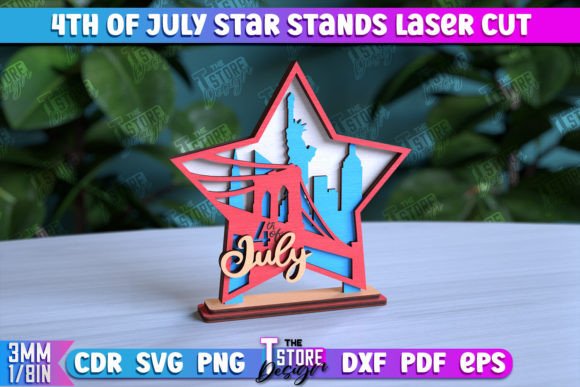
The first thing that strikes me about the 4th of July Star Stand American Symbol is its boldness. It is not subtle. It screams patriotism. The concept of a "stand" implies stability and display, which translates visually into a design that likely has a solid base and a prominent central figure. For a holiday theme like Independence Day, this works well. It feels celebratory, traditional, and instantly recognizable.
In terms of mood, this design leans towards classic Americana. It is not modern minimalist, nor is it whimsical. It is grounded. When I imagine this on a product, I picture a crisp white cotton tote bag or a heavy-weight sweatshirt. The red, white, and blue color scheme mentioned in the description suggests high contrast, which is excellent for visibility but requires careful planning if you were to adapt this for embroidery. If you were to trace this outline for an appliqué project, the clean lines would allow for precise satin stitching around the edges, giving the final product a polished, professional look.
However, because this is described as a 3D stand design, there may be depth cues in the artwork that do not translate well to flat fabric. Embroidery is inherently two-dimensional unless you are doing complex puff printing or heavy padding. A designer needs to simplify the source art if they intend to digitize it. The challenge here is translating the "stand" aspect—likely a vertical element—into a format that sits comfortably on a garment or accessory without feeling top-heavy or awkwardly placed.
Real-World Application Scenarios
Let’s talk about where this design actually lives in a shop. I recently worked on a batch of custom gifts for a client who wanted cohesive branding for their Fourth of July pop-up booth. They needed items that felt festive but not cheap. Here is how I see the 4th of July Star Stand American Symbol fitting into various product categories, keeping in mind its primary nature as a cutting file:
- Custom Apparel and Sweatshirts: If you convert this into an embroidery file, it would look striking centered on the back of a crewneck sweatshirt. The large scale of a "stand" design allows it to command attention. For front-left chest placement, however, you might need to crop the design to focus just on the star element, as the full stand might be too tall for a standard cap or hat embroidery area.
- Tote Bags and Market Totes: This is perhaps the strongest use case. A canvas tote featuring this design can serve as both a practical item and a walking advertisement for your brand. The sturdy nature of the bag supports the weight of any dense stitching or layered appliqué you might add to enhance the original cut file.
- Kitchen Textiles: Tea towels and aprons are huge sellers during the summer holidays. The patriotic theme fits perfectly here. Because kitchen items are washed frequently, the durability of the design matters. If you use this as a guide for a simple running stitch border or a fill-stitch background, it adds texture without overwhelming the utility of the item.
- Baby Items and Nursery Decor: Here, caution is advised. While the colors are appropriate, the "stand" motif might feel too rigid for baby clothes. If you soften the design by adding floral elements or converting it into a smaller, softer patch for a onesie, it becomes much more marketable to parents looking for personalized gifts.
Practical Designer Notes for Execution
As someone who reviews these assets for practical use, I have to emphasize the technical steps required before you start selling. You cannot simply upload a laser-cutting vector into your embroidery software and expect it to stitch correctly. Here is my checklist for handling this type of design:
- File Conversion and Digitizing: If you plan to embroider this, you must trace the outlines and create your own digitization. Pay close attention to the stitch density. Dense areas can pucker thin fabrics, so test on scrap material first. Ensure your stabilizer choice matches the fabric weight; tear-away stabilizer works well for woven cottons, while cut-away is necessary for stretchy knits.
- Thread Color Contrast: The description mentions red, white, and blue. In embroidery, thread sheen can change how colors appear. Test your thread choices against your fabric. White thread on white fabric can disappear if the lighting is poor, so consider using a contrasting thread for the satin stitch edge to define the shape.
- Hoop Size Constraints: Check the dimensions of the design relative to your machine’s maximum hoop size. A "stand" design often has height. If your hoop is too small, you may need to split the design into multiple sections or resize it, which can distort the proportions. Always confirm the hoop size requirements before committing to a production run.
- Small Detail Inspection: Look closely at the corners and intricate parts of the star. Tiny details often get lost in stitching or become difficult to trim cleanly. If the design has fine lines, consider simplifying them in your digitizing software to ensure clarity in the finished product.
- Licensing and Commercial Use: Before you list any handmade product on Etsy or your own website, verify the license terms. Some digital files are for personal use only. Even if you modify the design significantly, the underlying artwork may still be protected. Confirm whether you have the right to sell commercial embroidery items derived from this asset.
Final Verdict on Usability
The 4th of July Star Stand American Symbol is a strong graphic asset, but it requires skill to translate into the world of textiles. It is not a plug-and-play embroidery file. Its value lies in its clear, bold imagery, which makes it easy to adapt for various applications. For experienced designers, it offers a great starting point for creating patriotic-themed merchandise. For beginners, it serves as a reminder that different digital formats require different workflows.
I recommend using this design as a component rather than a standalone embroidery piece. Pair it with complementary stitched elements, such as stars, stripes, or text, to create a complete embroidery project. This approach enhances the visual appeal and adds value to your finished product. Whether you are making personalized gifts for friends or building a craft business around holiday decor, this design provides a solid foundation—if you respect its limitations and plan your execution carefully.
Ultimately, success in handmade goods comes down to presentation and quality. By testing thoroughly, choosing the right fabrics, and paying attention to detail, you can turn this digital concept into a tangible, desirable item that customers will love. Just remember to check your software compatibility and licensing agreements first, and always prioritize the integrity of the stitch work over speed.